Hackers Reverse-Engineer Flock Safety Cameras, Raising Surveillance Concerns
09/20/2026 / By Douglas Harrington
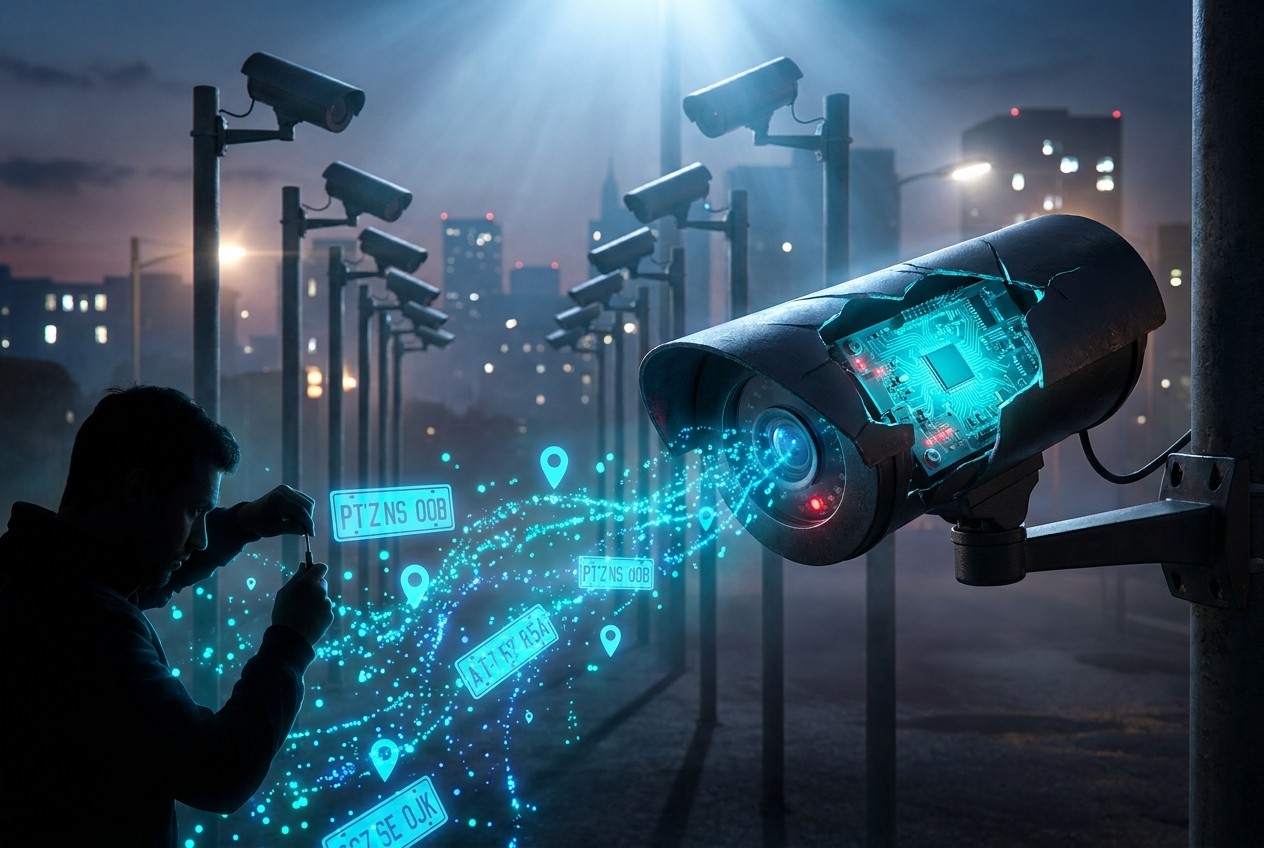
Hackers have reverse-engineered Flock Safety cameras, the automated license plate recognition systems deployed by law enforcement agencies and neighborhood associations across the U.S., according to reporting by The Hill.
The researchers gained access to camera data and functionality, demonstrating potential security gaps in the networked surveillance hardware. Flock Safety said it was aware of the findings and has taken steps to address the vulnerabilities, according to a company statement.
The cameras are deployed in thousands of U.S. communities, officials said, and the report has prompted questions about the security of automated surveillance systems that capture and store detailed location data on American drivers. A nationwide network of automated license plate readers, primarily from companies like Flock Safety, captures and stores detailed location data on billions of American drivers, recording not just license plates but also vehicle make, model, color and unique features, creating a digital fingerprint. [1]
The disclosure adds to a growing record of scrutiny facing Flock Safety. Lawmakers have called on the Federal Trade Commission (FTC) to investigate the company for allegedly failing to implement cybersecurity protections that expose its camera network to hackers and spies, according to a letter sent by Sen. Ron Wyden (D-OR) and Rep. Raja Krishnamoorthi (D-IL, 8th). [2] The recent reverse-engineering findings arrive as multiple cities and states have moved to terminate or reconsider their contracts with the Atlanta-based company.
What the Researchers Found
The reverse engineering revealed how Flock cameras collect, store, and transmit license plate data, according to The Hill. Researchers demonstrated the ability to access camera feeds or alter settings, according to the report. The techniques were presented at a security conference or published online, the report stated. The report did not indicate whether the vulnerabilities were exploited maliciously before disclosure, according to the article.
Experts said the findings highlight potential security gaps in networked surveillance hardware, according to officials. The concerns parallel earlier warnings from Capitol Hill. In their letter to FTC Chairman Andrew Ferguson, Wyden and Krishnamoorthi urged the agency to probe why Flock does not enforce the use of multi-factor authentication (MFA), a security protection that prevents unauthorized access even when passwords are stolen. [2] The lawmakers said stolen police logins are exposing Flock surveillance cameras to hackers.
The technical findings arrive against a broader pattern of security lapses in connected camera systems. A report from NaturalNews.com described how a nationwide network of automated license plate readers is capturing and storing detailed location data on billions of American drivers, creating a digital fingerprint that extends far beyond simple plate numbers. [1] Independent researchers and privacy advocates have argued that such systems aggregate data in ways that create risks if the underlying infrastructure is compromised.
Company and Law Enforcement Response
A Flock Safety spokesperson said the company takes security seriously and has patched or is patching the identified issues, according to the report. The company disputed the scope or severity of the findings, saying there was no evidence of malicious exploitation, officials said. Flock Safety added that it works with researchers and customers to improve system security, according to the company.
Law enforcement agencies using Flock cameras said they are reviewing the report, according to statements cited by The Hill. Some departments said they will continue using the cameras while monitoring for security updates, officials said. The responses reflect a widening divide among agencies. The Los Angeles Police Department (LAPD) allowed its three-year contract with Flock to expire, with a senior LAPD official citing serious concerns around civil liberties and privacy, according to reports first published by ABC7 and the LA Times. [3]
State-level actions have followed. The Florida Department of Transportation ordered all automated license plate readers removed from state highway rights-of-way within 30 days, citing data privacy violations and law enforcement misconduct, according to NaturalNews.com. [4]
Florida Gov. Ron DeSantis endorsed the move as necessary to prevent a digital AI surveillance state, a decision that followed similar action taken by Texas Gov. Greg Abbott’s administration after a Lufkin police officer was indicted on 100 felony counts. [4] Communities across the U.S. are pushing back against Flock Safety’s automatic license plate recognition cameras, with critics calling the technology mass surveillance while police defend it as a crime-fighting necessity. [5]
Privacy and Policy Implications
Privacy advocates said the findings underscore risks of widespread license plate surveillance, according to statements in the report. Critics called for audits, transparency and limits on camera networks, the report stated. The American Civil Liberties Union and other organizations have argued that constant monitoring creates a chilling effect on public life, a concern echoed in the reporting on the reverse-engineering disclosure.
Supporters said the cameras help solve crimes and are subject to usage policies, according to law enforcement officials. The debate continues as cities weigh contracts and regulations, officials said. Towns and cities from Texas to Minnesota have voted to remove, pause, or reconsider their contracts with the Atlanta-based company, with opponents citing concerns over data privacy, potential misuse by law enforcement, and the chilling effect of constant monitoring. [5]
The policy debate has drawn in federal lawmakers. In their letter to the FTC, Wyden and Krishnamoorthi urged the agency to examine why Flock does not enforce multi-factor authentication, which they said leaves the camera network vulnerable to hackers and spies. [2] The request represents one of the most direct congressional interventions into the company’s cybersecurity practices to date. The broader context includes a surveillance ecosystem in which one company’s cameras can be cross-referenced with others, a concern raised by analysts who track the surveillance industry.
Conclusion
The report adds to ongoing scrutiny of automated surveillance systems, according to observers. The disclosure that hackers reverse-engineered Flock Safety cameras follows a year of contract cancellations, state-level removal orders, and congressional demands for federal investigation. Flock Safety and law enforcement agencies have not announced major changes beyond security updates, officials said.
Further testing and disclosure may follow, researchers said, as the debate over camera networks continues. The outcome may shape how municipalities evaluate surveillance contracts in the months ahead, with some lawmakers and privacy advocates pressing for audits and transparency requirements before renewals are approved. For now, agencies that continue to use the cameras are monitoring for security updates, officials said.
No evidence has emerged that the vulnerabilities were exploited maliciously before disclosure, according to the report. The company has said it works with researchers and customers to improve system security. Whether that posture satisfies critics who have called for independent audits remains an open question as the debate over networked surveillance hardware proceeds.
References
- Willow Tohi. “The digital panopticon: License plate readers are tracking you everywhere you go”. NaturalNews.com. September 1, 2025.
- NaturalNews.com. “Florida joins Texas in ordering removal of Flock license plate cameras”. September 2, 2026.
- TechCrunch. “LAPD lets contract with surveillance giant Flock expire, citing ‘serious concerns’ over civil liberties and privacy”. July 13, 2026.
- NaturalNews.com. “Surveillance backlash: Cities ditch Flock license plate cameras amid privacy fears”. August 21, 2026.
- TechCrunch. “Lawmakers say stolen police logins are exposing Flock surveillance cameras to hackers”. November 3, 2025.
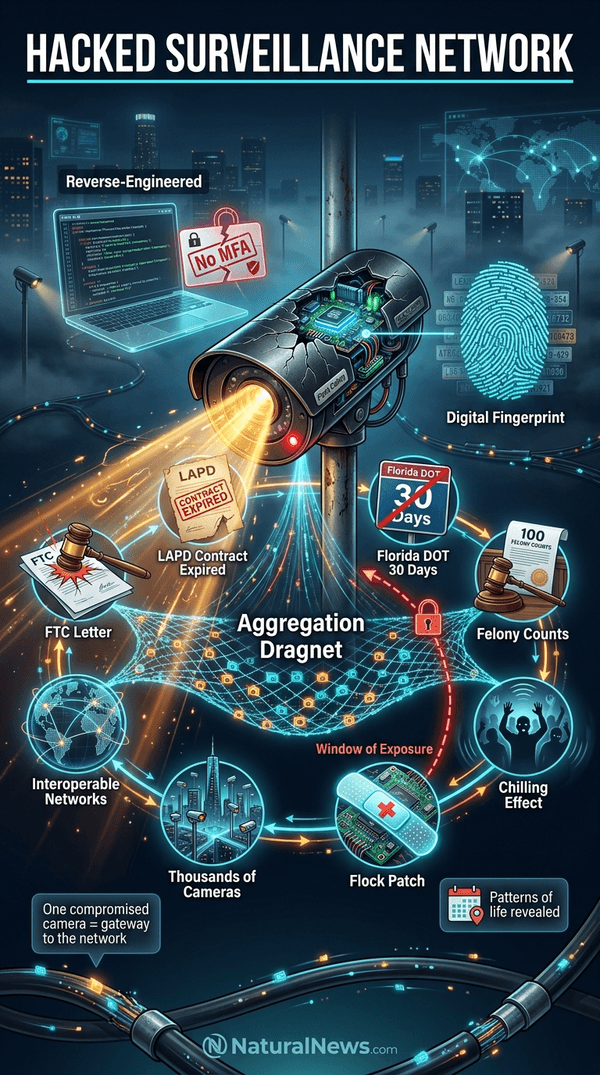
Explainer Infographic
Submit a correction >>
Tagged Under:
automated license plate readers, big government, Dangerous, flock, Flock Safety, freedom, Glitch, government, hackers, Liberty, police state, policing, politics, privacy, privacy watch, public safety, resist, surveillance, technology, traffic cameras
This article may contain statements that reflect the opinion of the author
RECENT NEWS & ARTICLES