A pledge for power, but a thirst unquenched: Tech’s data center dilemma
02/28/2026 / By Willow Tohi
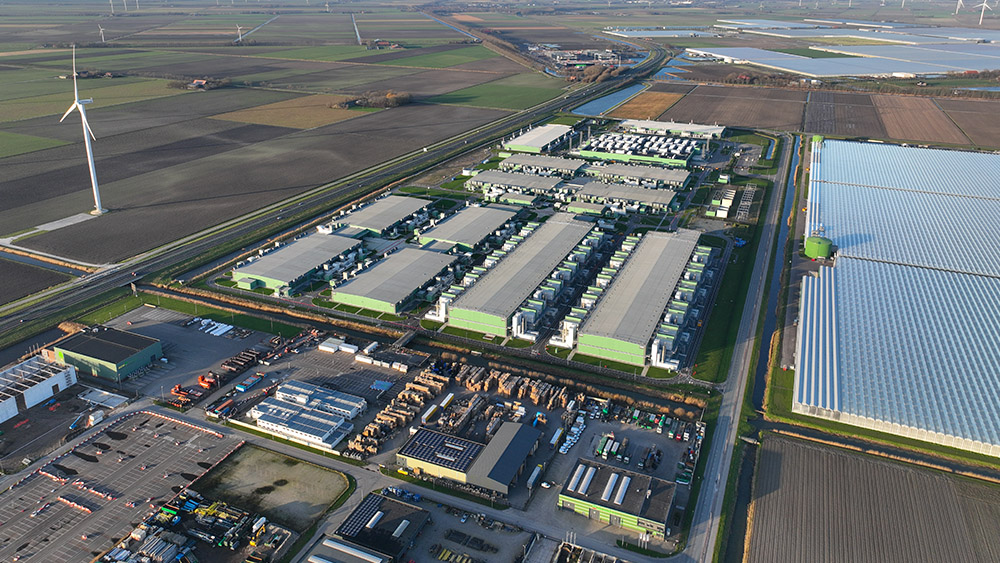
- Major tech companies will meet with President Trump at the White House next week to sign a “Rate Payer Protection Pledge.”
- The pledge commits companies to providing their own power for new AI data centers to prevent rising electricity bills for nearby consumers.
- This political move follows voter backlash over spiking utility costs, which became a key issue in recent gubernatorial elections in Virginia and New Jersey.
- The pledge does not address the significant water consumption of data centers, a growing point of conflict in drought-stricken regions like Texas.
- The initiative highlights the intensifying competition for finite resources—power, water and land—between rapid AI expansion and community needs.
In a bid to preempt a potent political liability, leaders from Amazon, Google, Meta, Microsoft and other tech titans are set to convene at the White House on March 4. Their mission: to formally pledge that their voracious new artificial intelligence data centers will not cause Americans’ electricity bills to skyrocket. The “Rate Payer Protection Pledge,” championed by President Donald Trump, requires these companies to build, bring, or buy their own power supply for AI infrastructure. This high-profile brokerage underscores a stark reality: the breakneck expansion of AI is colliding with the practical limits of the nation’s power grid and the pocketbooks of voters, forcing the administration to mediate between corporate ambition and consumer anxiety.
The political spark of rising rates
The White House’s urgency is not born in a vacuum. Surging electricity costs, exacerbated by data center demand, have already proven to be a decisive campaign issue. In the November 2025 gubernatorial elections in New Jersey and Virginia, skyrocketing utility bills moved to the forefront of voter concerns. New Jersey customers paid an average of 19 percent more for energy in 2025 than the year prior. In Virginia, residents endured 30 percent hikes from 2020 to 2023 and face approved increases of up to 21 percent by 2027. Analysts directly link a significant portion of these increases to the massive energy draw of data centers, which in Virginia alone consume at least a quarter of the state’s electricity. The political lesson was clear: voters hold elected officials accountable for affordability, turning power bills into potent electoral fuel.
The limits of a power-only promise
While the pledge aims to wall off residential ratepayers from the financial strain of grid upgrades and new generation, it addresses only one facet of a multifaceted resource crisis. The commitment notably sidesteps the equally contentious issue of water consumption. Data centers require enormous volumes of water for cooling, a demand that is creating acute strain in arid regions. In Texas, for example, projections indicate data centers could use 400 billion gallons of water annually by 2030, a staggering figure that threatens to divert supplies from municipalities and agriculture during persistent drought. From Northern Virginia, where surveyors for power lines face threats from landowners, to parched Texas communities, the AI boom is triggering conflicts over land and water that a power pledge does nothing to resolve.
From factories to server farms
This moment echoes historical transitions where industrial revolution demanded new infrastructure, often pitting progress against local resources and stability. The 20th century saw factories and manufacturing hubs reshape regions, drawing on power and water while promising economic growth. Today’s data centers are the foundational factories of the digital age, but their geographic flexibility and intense, localized resource demands present a novel challenge. They can be built almost anywhere with sufficient power and fiber, placing unprecedented strain on communities that may lack the water or transmission capacity to support them. The current confrontation is a 21st-century iteration of an old story: who bears the cost of progress, and who gets left thirsty in its wake?
A regulatory and infrastructure crossroads
The White House pledge, while significant, operates alongside broader regulatory pushes. In July 2025, President Trump issued an executive order aimed at streamlining the federal approval process for data centers and their associated power infrastructure, declaring their rapid buildout a national priority. Furthermore, regional grid operators like PJM Interconnection, which serves 13 states including Virginia and New Jersey, are planning billions in grid expansion costs that will ultimately be socialized across millions of customers. The tech pledge seeks to carve AI demand out of this equation, but it does not reduce the systemic need for massive investment in national generation and transmission—investment that will be needed whether tech companies pay their own way or not.
The other crisis on the table
The White House meeting will produce a notable agreement on electricity, a direct response to a pain point voters have made impossible to ignore. However, by focusing solely on power bills, the pledge risks offering a partial solution to a comprehensive problem. The silent partner in the room will be water—the next frontier in the clash between technological ambition and community sustainability. For the pledge to represent a truly responsible path forward, the conversation must evolve to include binding commitments on sustainable water use and siting. Otherwise, the deal merely shifts the burden of the AI boom from one limited resource to another, leaving the most fundamental tensions between data centers and daily life unresolved. The nation’s energy bills may find protection, but its aquifers remain undefended.
Sources for this article include:
Submit a correction >>
Tagged Under:
AI, big government, Big Tech, Collapse, cyberwar, drought, electricy, food supply, future tech, Glitch, harvest, power, power grid, power supply, robotics, tech giants, technocrats, Trump, water, White House
This article may contain statements that reflect the opinion of the author
RECENT NEWS & ARTICLES