Silver Market Cataclysm: How Green Tech, AI, and Military Demand Are Exposing a Terminal Supply Crisis
01/24/2026 / By Mike Adams
Introduction: The End of Cheap Silver
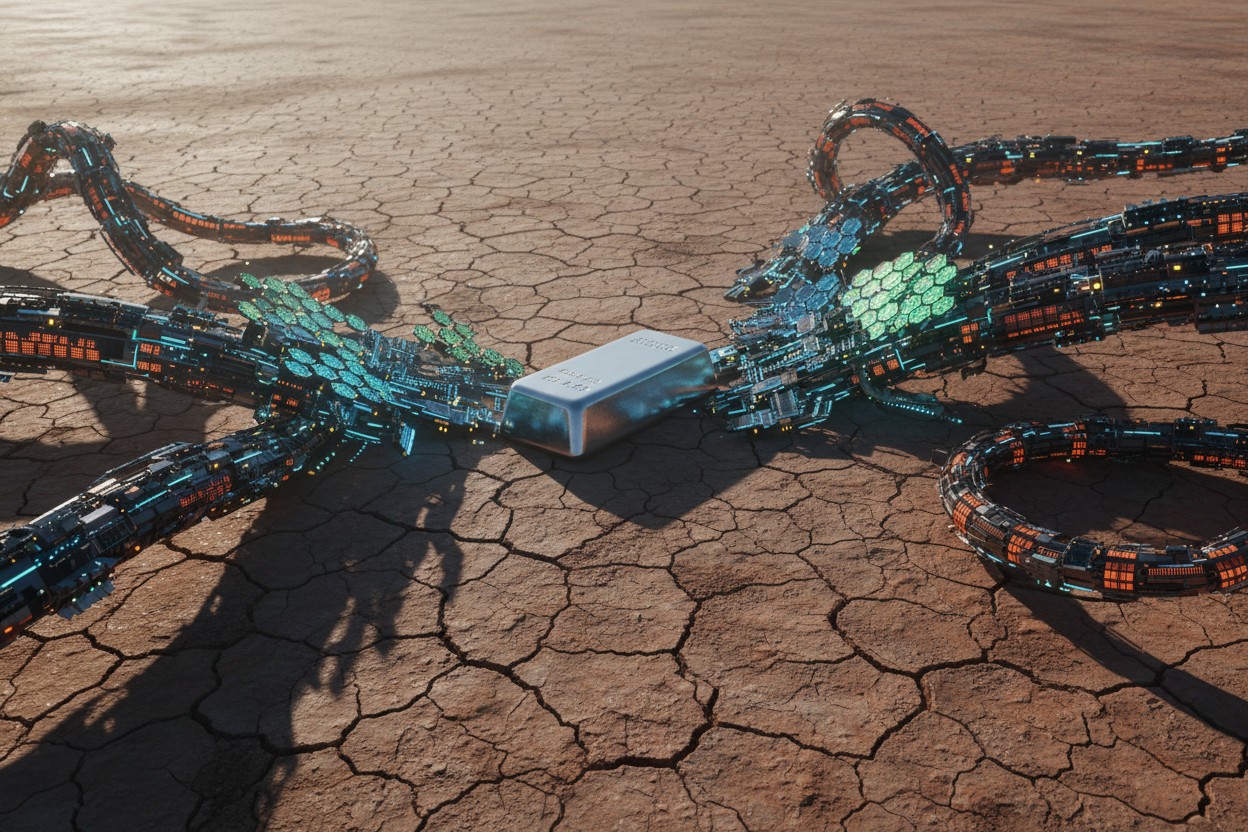
In January 2026, silver did not just break records; it shattered the financial world’s complacency, piercing the $103 per ounce barrier. This is not a temporary spike or a speculative bubble. It is the unmasking of a fundamental, irreversible reality: the era of cheap and abundant silver is over. The market is now in the grip of a terminal supply crisis, a cataclysm years in the making, finally revealed by the collision of explosive industrial demand and utterly constrained supply.
The white metal’s parabolic rise is the direct result of a structural deficit that has gutted global inventories. For five consecutive years, the world has consumed more silver than it has produced, with cumulative shortfalls since 2021 exceeding a staggering 820 million ounces. [1] This relentless drain has exposed the fragile foundation upon which centralized financial markets like the COMEX have built their paper-trading empires—empires now teetering on the brink as the physical metal vanishes from vaults. [2]
This crisis is driven by a perfect storm. The relentless push for a centralized ‘green’ economy, the frantic global arms race, and the voracious power demands of artificial intelligence are all competing for the same finite resource. Meanwhile, the supply side, manipulated and obscured by institutional deceit for decades, cannot respond. As analyst David Morgan has warned, the disconnect between paper promises and physical reality has become untenable. [3] We are witnessing not a market correction, but a permanent reordering of value—one that central planners and dishonest banks are powerless to stop.
The Supply Crunch: Why Mines Can’t Keep Up
The core of the supply crisis lies in a simple, inescapable geological and economic truth: silver is not primarily mined for itself. Approximately 72% of all newly mined silver is produced merely as a by-product of digging for copper, zinc, lead, and gold. [2] This makes its supply profoundly inelastic. A soaring silver price does not trigger a rush to open new silver mines; it is beholden to the economics and production schedules of these other metals. If the demand for copper stalls, silver production falls, regardless of how high its price goes.
This structural flaw is compounded by stagnant mine production, which has hovered around 830 million ounces annually for years. [1] Attempts to increase output run into a wall of regulatory hurdles, declining ore grades, and the same centralized environmental policies that simultaneously demand more silver for ‘green’ technologies. The system is working against itself.
Recycling, often touted as a solution, is a feeble bandage. It accounts for only about 19% of total supply and faces severe practical limits. [2] In countless modern industrial applications, from microelectronics in smartphones to the silver paste in solar panels, the metal is used in such minute, dispersed, or alloyed forms that economical recovery is impossible. Once used, it is often lost forever—a permanent subtraction from above-ground stocks. This is not a cyclical shortage but a relentless drawdown of a strategic resource with no replacement in sight.
Solar & EVs: The Green Economy’s Silver Addiction
The very technologies promoted by globalist institutions as the path to a controlled, centralized future are now cannibalizing the resources required to build it. The solar photovoltaic (PV) sector has become a silver monster, its consumption exploding from 11% of total demand in 2014 to a voracious 29% today, devouring roughly 197 million ounces annually. [1] This demand is on a one-way trip higher. Next-generation solar cell designs, like TOPCon and heterojunction, are more efficient but require 20% more silver per panel than standard models. The ‘green transition,’ built on mandates and subsidies, is functionally a command to consume silver at an accelerating rate.
The electric vehicle (EV) revolution compounds the problem. A single EV uses between 67% and 79% more silver than a traditional internal combustion engine vehicle, primarily for electrical components and battery management systems. [4] Furthermore, the sprawling charging infrastructure needed to support this forced transition is itself a massive silver sink, projected to add 100 to 200 million ounces of demand through 2030. [1]
This creates a devastating irony. The climate change narrative, long used to crush domestic energy production and centralize control, has spurred a demand for technologies that are now exposing critical mineral shortages. [5] The push for a ‘green’ economy is not leading to abundance but to a stark confrontation with physical limits, proving that central planning consistently fails to account for reality.
The Samsung Game-Changer: Solid-State Batteries
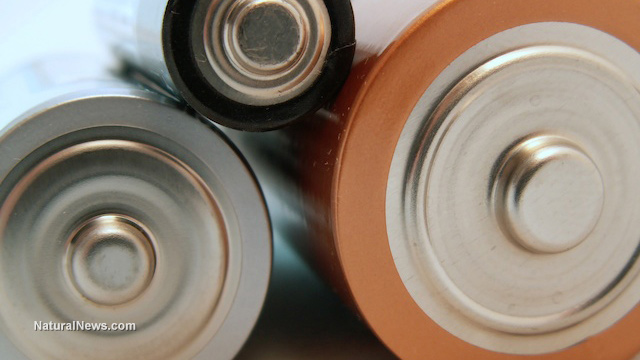
Just as the market grapples with existing demand, a technological thunderclap threatens to overwhelm it entirely. Samsung’s breakthrough in solid-state battery technology represents a potential demand shock of historic proportions. Their design utilizes a silver-carbon composite anode, requiring approximately 1 kilogram of silver for every 100 kWh battery pack. [1]
The implications are staggering. Consider a conservative scenario where this technology captures just 20% of the global EV market. Analysis suggests this alone could add over 514 million ounces of new annual silver demand. [1] To put that in perspective, that figure is equivalent to roughly 60% of the entire world’s current annual mine production. The battery offers a 500 Wh/kg density, 9-minute charging, and a 600+ mile range—features that make rapid, widespread adoption not just possible, but likely.
This is not a distant future prospect. It is a pending avalanche. When this technology scales, it will create a demand pull so powerful it could vacuum remaining silver stocks from the market in short order. It epitomizes the crisis: a single technological advance, pursued for efficiency and profit, can now completely destabilize the supply landscape for a foundational element. The centralized tech and auto industries are racing toward a wall, and silver is the brick.
Military & AI: Permanent Demand from Defense and Data
Beyond the civilian economy, two other relentless drivers ensure demand will remain high regardless of economic cycles: militarization and artificial intelligence. Modern warfare is built on silver. It is essential in guidance systems, satellites, communication equipment, and munitions. Conservative estimates place annual military consumption between 10 and 50 million ounces. [6] Critically, when silver is used in a missile or explosive ordnance, it is destroyed upon detonation. This represents a permanent, one-way removal of supply from the planet—a ‘consumptive use’ that starkly contrasts with the recyclable nature of jewelry or silverware.
Simultaneously, the AI boom is creating a new, insatiable industrial user. AI data centers, the physical brains of the digital age, are immense consumers of power and sophisticated electronics. Silver’s unparalleled conductivity is critical for power distribution, thermal management, and advanced semiconductors within these facilities. Through 2030, the AI sector could consume an additional 50 to 75 million ounces. [6]
This demand is underscored by the broader geopolitical scramble. As Mike Adams noted in a 2025 analysis, the U.S. government views dominance in AI as an existential race, willing to make extreme calculations to secure the energy and resources needed for data centers. [7] In this context, silver transitions from a mere commodity to a strategic material essential for national power and technological supremacy in an increasingly fractured world.
Investment & Monetary Dynamics: Silver’s Dual Nature
The industrial story is only half the equation. Silver’s timeless role as honest money and a store of value is powerfully reasserting itself, tightening the physical market further. In 2025, massive inflows into silver-backed Exchange Traded Funds (ETFs), estimated between 130 and 187 million ounces, effectively locked away nearly 40% of that year’s newly mined supply. [1] This was not speculation, but a flight to safety, a movement of capital into tangible assets as faith in centralized fiat currencies and financial institutions erodes.
The gold-silver ratio, a key monetary metric, has collapsed from a staggering 104:1 to a range between 50:1 and 64:1, signaling silver’s dramatic outperformance. [1] This compression indicates the market is recognizing silver not just as ‘poor man’s gold,’ but as a precious metal in its own right, whose industrial fate makes it even rarer in a financial sense. Despite prices near historic highs, physical demand for bars and coins remains robust at 182-190 million ounces annually, as people globally seek to preserve wealth outside the banking system. [8]
This investment demand creates a powerful feedback loop. Each ounce pulled into private vaults or secure storage is an ounce permanently removed from the available industrial stockpile. As David Morgan of The Morgan Report has consistently explained, this physical tightness ultimately exposes the paper manipulations of exchanges like the COMEX, where trading volumes suggest a turnover of silver far exceeding actual physical holdings. [9] The day of reckoning for this paper fraud is approaching.
No Substitutes: Why Silver Is Irreplaceable
Faced with soaring prices, a logical question is: can’t another material take its place? The resounding answer from materials science is: no. Silver possesses a unique constellation of properties—the highest electrical conductivity of any metal, the highest thermal conductivity, exceptional reflectivity, and potent antimicrobial effects—that no other element can match in combination. [2] Attempts at ‘thrifting,’ or reducing the silver content in products like solar cells, quickly run into diminishing returns, sacrificing the efficiency and longevity that make the technology viable.
Copper and aluminum are often proposed as cheaper substitutes, but they fail catastrophically in high-performance, miniaturized applications. They lack the conductivity, cannot be used in the same fine lines and contacts, and would lead to unacceptable energy losses and heat generation in everything from advanced semiconductors to military radar systems. [10]
This irreplaceability turns silver from a commodity into a keystone element for modern civilization. As discussed in the book ‘The Silver Mirage,’ there is no technological workaround on the horizon. [2] The centralized global industrial system has built its most advanced and ‘critical’ technologies on a foundation of silver, assuming its abundance was infinite. That assumption has now been revealed as a catastrophic error in planning, one that threatens the viability of the very projects the elites have championed.
Conclusion: The Coming Silver Supercycle
The evidence converges on an inescapable conclusion: the silver market has entered a permanent structural deficit. Demand from solar, EVs, AI, and defense is growing at a 3-4% compound annual rate, while supply remains shackled by geology and by-product economics. [1] The potential catalyst of Samsung’s solid-state battery technology alone could add demand equal to over 60% of current global mine output by 2030. There is no scenario where supply catches up.
This sets the stage for a silver supercycle that will dwarf previous manias. With the market now recognizing both its indispensable industrial role and its monetary heritage, the price discovery mechanism is breaking free from decades of institutional suppression. Analysts like Alan Hibbard of GoldSilver.com expect silver to trade consistently above $100 in 2026, with forecasts stretching toward $150 and beyond as deficits deepen. [11]
For individuals, the path is clear. In a world of fraudulent fiat currency, centralized control, and institutional deceit, tangible assets are the ultimate form of self-defense. Silver, alongside gold, represents honest money with no counter-party risk—wealth that cannot be printed into oblivion or confiscated digitally by a central bank. [12] The current price, while shocking to many, may represent only the beginning. The silver cataclysm is not a threat; it is a current event. It is the sound of a failing system hitting its physical limits, and the opportunity for those who value truth and preparedness to secure a foundation of real value for the turbulent decade ahead.
References
- Current Silver Status into 2026 – DDAmanda.com.
- The Silver Mirage: Awakening to the COMEX Nightmare. Unknown.
- Las Vegas Money Show, Money, Metals, and Mining – TheMorganReport.com. David Morgan. April 28, 2023.
- Can silver hit $150 in 2026 – Critical Minerals and Energy Intelligence – Theoregongroup.com. December 29, 2025.
- Health Ranger Report – CITIZENs LOG – Brighteon.com. Mike Adams. May 10, 2022.
- Silver: Short Squeeze In An AI Race – Seeking Alpha. January 22, 2026.
- Breaking the Chains on BrightU How AI solar and chip wars will trigger a global crisis – NaturalNews.com. Jacob Thomas. May 19, 2025.
- Silver Coins: Memories Of Sound Money – ZeroHedge.com. Jeffrey Tucker. December 30, 2025.
- Mike Adams interview with Andy Schectman – February 18 2025. Mike Adams.
- Mike Adams interview with Andy Schectman – October 31 2023. Mike Adams.
- Silver Price Predictions 2026: After a 147% Surge, What’s Next? – Goldsilver.com.
- US Monetary Policy Rare Earths Trade and BRICS Shifts Impact Global Finance – NaturalNews.com. Finn Heartley. October 22, 2025.
- The Preppers Blueprint – The Step-By-Step Guide To Help You Through Any Disaster. Tess Pennington.
- Mike Adams interview with John Perez – November 14 2022. Mike Adams.
- Silver Price Forecast – Breakout Momentum and Fed Liquidity Set Stage … – FXEmpire.com.
Submit a correction >>
Tagged Under:
AI, artificial intelligence, current events, EV, green tech, military, silver, solar power
This article may contain statements that reflect the opinion of the author
RECENT NEWS & ARTICLES